Operational documentation
The manual explains decoder and server startup, daemon mode, alternate ports, database reloads, automatic reports and the on-screen error flags.
The surviving material shows an ecosystem that was meant to be understood and reused: a 23-page ACARSd manual, a documented network protocol and, later, sixteen practical libhomeradar programming examples.
The original English manual describes installation, databases, command-line operation, decoder status, server mode, logs, frequencies, the client protocol, live web access and the libraries used internally.
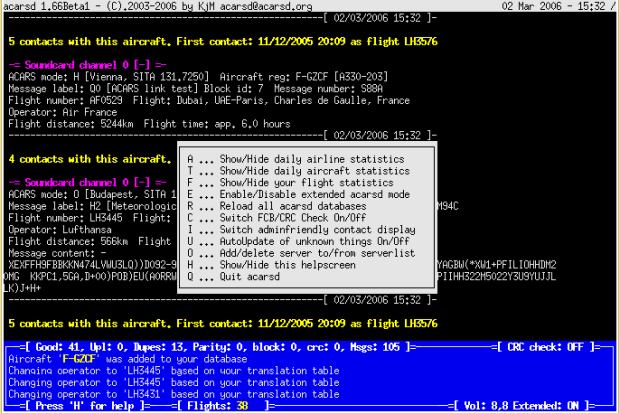
The manual explains decoder and server startup, daemon mode, alternate ports, database reloads, automatic reports and the on-screen error flags.
Client/server status codes cover searches, reports, database contributions, administrative messages, frequency information, keep-alives, client notifications and binary data.
The manual states that ACARSd was completely written in C. A Cygwin build had already succeeded; the remaining issue described there was access to sound input comparable to Linux /dev/dsp.
The recovered examples page explicitly says the samples show how to use libhomeradar in another program. It describes the library as C code for Linux and Windows and, at that time, supports Kinetic SBS-1 and AirNav RadarBox sources.
Examples attach handlers such as LHR_ONCONTACT and connection/error events. A program could initialise the library, add a host and let callbacks receive contacts.
Examples load databases and resolve aircraft, registrations, airline and route context. Another demonstrates geographic filtering and distance calculations from a configured receiver position.
The examples cover multiple hosts, SBS-1 and RadarBox together, statistics, an internal queue, a socket server and forwarding contacts to a collector.
/* the shape of the first recovered example */
LHR H = homeradar_init(16, LHR_AUTOCONNECT, &e, NULL);
e = homeradar_addhost(H, "sbs1.libhomeradar.org", 33033,
                      LHR_SBS1, 0, NULL);
homeradar_onhandler(H, LHR_ONCONTACT, e, newcontact);
...
homeradar_destroy(H);
Museum transcription of the essential calls in example #1. The historical hostname and port are shown only as archival evidence; no live service is implied.
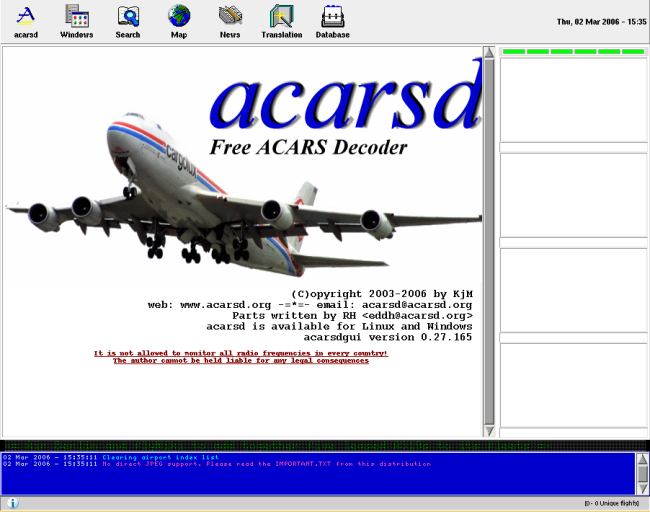
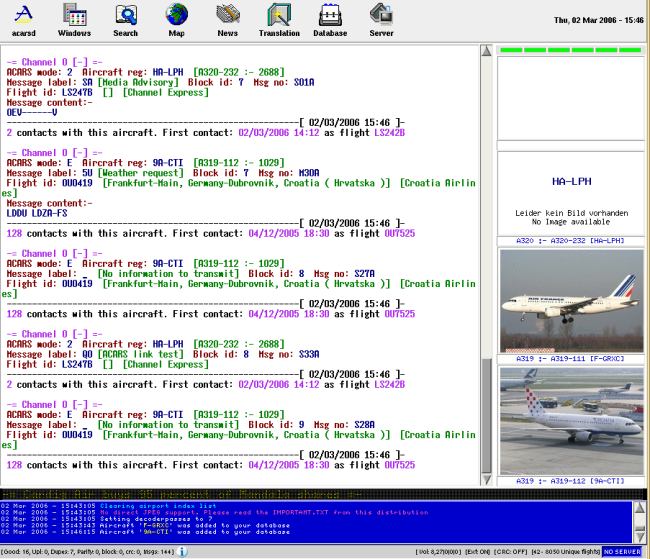
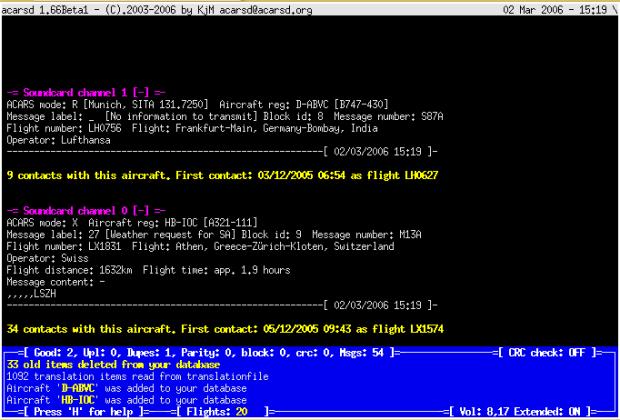
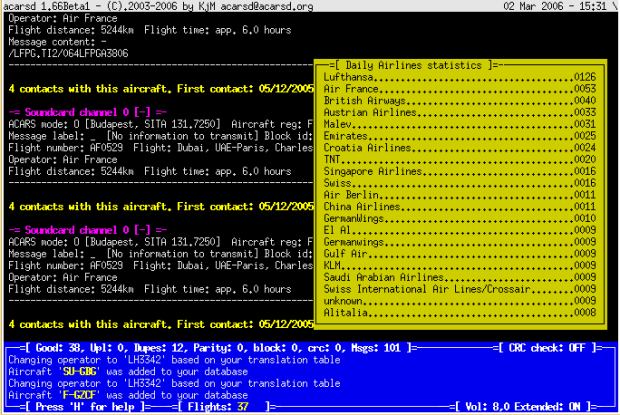
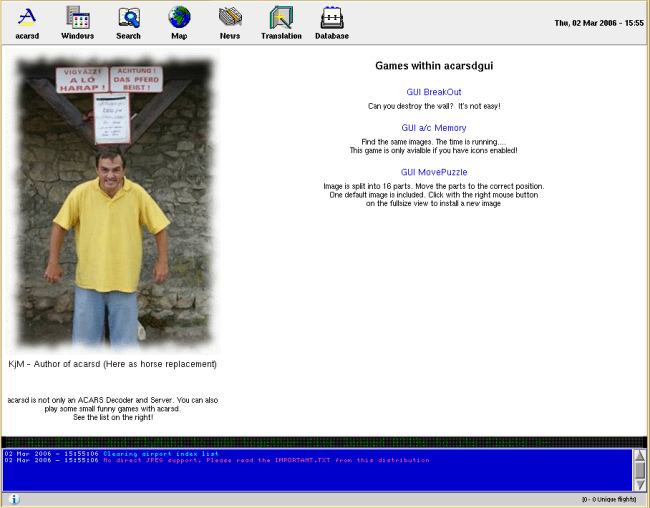
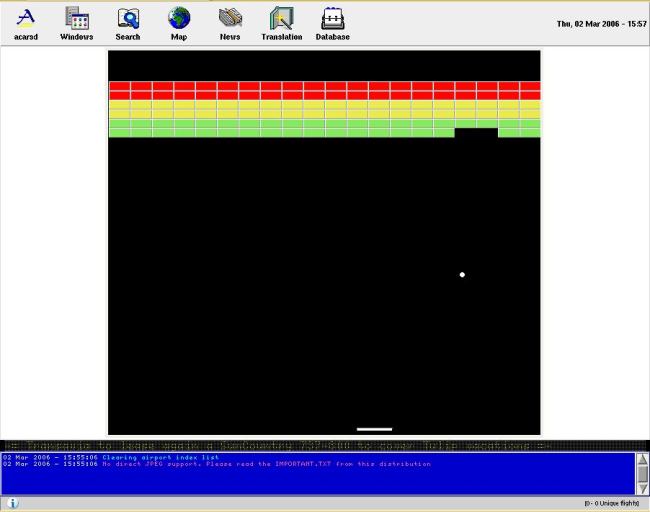
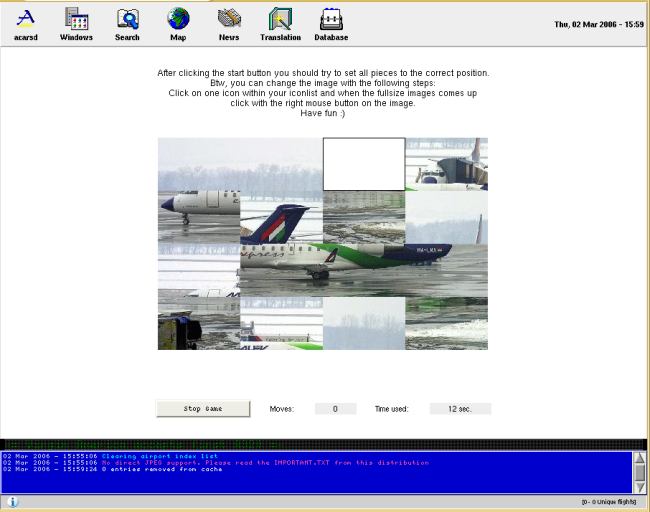
Nine surviving screenshots preserve both the graphical ACARSdGUI and the Linux console interface on the same day. They show live decoding, aircraft imagery, databases, statistics, help, route enrichment — and the deliberately hidden games.