Selected artifacts

The archive room.

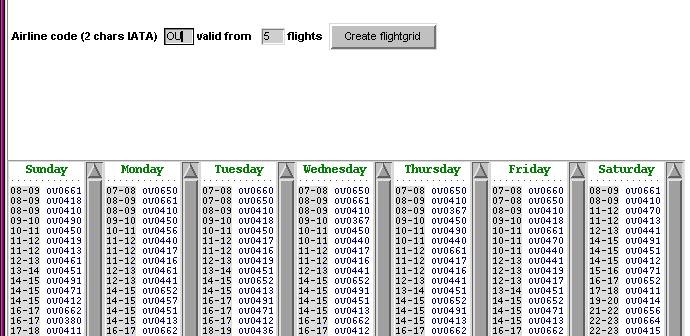
This first museum build deliberately publishes no historical message databases or live aircraft data. It preserves screenshots, architecture, source analysis and project history instead.
What survives

The recovered material already spans three different types of evidence: executable project source, historical web content and developer documentation.

ACARSd source treeC, Tcl/Tk, Makefiles, clients, web server, public database functions, server discovery and later SBS integration.
SOURCE
libacarsd RCS/CVS repositoryThe decoder library: code tables, CRC, FFT experiments, learning routines and revision metadata.
RCS
Original acarsd.org websiteTemplates, PHP services, API pages, server tools, release notes, webserver pages and historical site structure.
WEB
Original content directoryIncludes the December 2004 “story behind acarsd”, home-page descriptions, libacarsd documentation and release material.
TEXT
libhomeradarA later reusable library for aircraft/flight data processing, databases, Mode-S/SBS handling and network services.
LIBRARY
libacarsd2 CVSReusable second-generation ACARS engine: sound-card decoding, TwoOnOne, contact databases, network server/client and public contribution interfaces.
CVS
mACARSSmall native Windows ACARS decoder built around libacarsd2.dll; its earliest preserved title calls it the “free mini ACARS decoder”.
WINDOWS
winsend2Native Win32/MinGW32 C application for SBS-1/RadarBox contribution that grew into an ACARS/ADS-B workstation and was explicitly updated for the new collector and ATLAS in October 2010.
FEEDER
FlightShare2The later focused native Win32/MinGW32 C contribution tool for FlightGlobal — deliberately simpler than winsend2 and no longer based on Tcl/Tk.
ATLAS
dbadd_lhr.cRecovered real-time ingest bridge from uploaded ACARSd contacts into MySQL and libhomeradar-normalised live data.
INGEST
February 2006

The World ACARS Report

By 2006 the network had grown far beyond a local decoder. The first World ACARS Report preserved a worldwide snapshot assembled by acarsd.org from the distributed data stream.

One day in the worldwide archive: the report for 2 January 2006 lists 16,081 messages and records aircraft, type, airline, flight and — where the translation database could resolve it — route information. Entries included aircraft such as G-BNLL · B744 · BA0143 · LHR–DEL, N809NW · A333 · NW0052 · DTW–FRA and D-ABAS · B738 · AB8265 · MAN–HAM.
Worldwide ACARS log
Location: worldwide

Created by: www.acarsd.org
Free ACARS decoder for Linux and Windows

ACARS LOG 0000 20060102 to 2359 20060102
  Messages:      16081
  Flights:       16081
  Registrations: 16081

G-BNLL   (B744  BA)  BA0143  (LHR-DEL)
D-ABAS   (B738  AB)  AB8265  (MAN-HAM)
N809NW   (A333  NW)  NW0052  (DTW-FRA)

This small extract also shows why the flight-translation work mattered: raw operational identifiers became recognisable flights and routes. The complete historical report remains an archival artifact rather than a live-data service.

Recovered downloads

Forgotten pieces of the ecosystem.

The restored 139 MB website archive preserves original public download packages as well as the pages that described them.

acarsd-live.tar.gzEarly 2003 browser-live experiment: acarsdhttpd, PHP/JavaScript display and FYSB aircraft images.
WEB LIVE
api.zipDeveloper API header defining structured client/server operations, database contribution, route context, access control and compressed/binary transport.
API
JACARS referenceThe download page and server HOWTO document an independent Java client for the ACARSd network.
JAVA
Hidden gamesThe original screenshot page documents three hidden games. Surviving Tcl/Tk source identifies all three as BreakOut, a/c Memory and MovePuzzle — and preserves the hidden ESC acarsd ESC launcher sequence.
EASTER EGG

Open the Platform exhibit →

Why there are no download links yet: this museum is intended as historical documentation, not as a revival of the old data service. Source packages can be curated and added later as clearly labeled archival artifacts after reviewing licenses, personal information and obsolete external dependencies.